Broca’s Area Location, Function, and Impact of a TBI
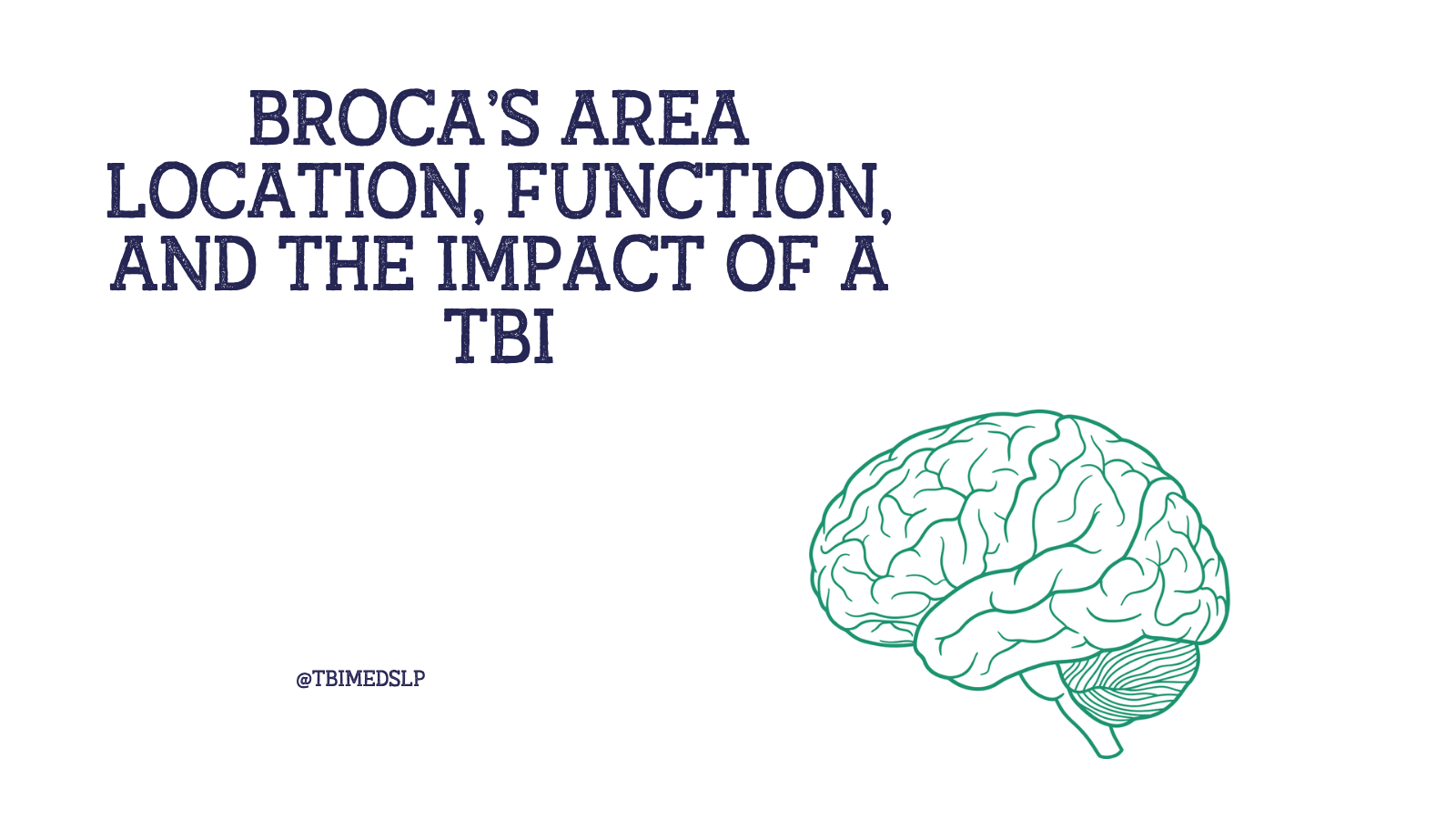
Broca's Area is a small region located in the brain's frontal lobe. It plays a crucial role in our ability to speak and comprehend language. In this post, I’ll talk about Broca’s Area. We’ll look at how our brains help us communicate.
Broca's area, named after Pierre Paul Broca, a 19th-century French doctor. He first discovered this part of the brain. Broca's area is now a key focus for researchers studying how we process language. Neuroimaging techniques and cognitive tests reveal how this brain area affects speech. They help us see how we speak and understand better.
Understanding Broca's area helps us grasp how humans communicate. It also brings awareness to the link between the brain and language.
Understanding Broca's Area and Its Role in Aphasia: Expressive Language Production
Broca's Area is on the left side of the brain. It helps us produce language. It helps plan and coordinate the complex movements needed for speech. Broca's area helps us turn our thoughts into spoken language. It plays a key role in language expression. It helps us share our ideas, needs, feelings, and experiences with words.
Broca's Area helps with speaking and also processes syntax and grammar. It enables us to use grammar correctly. This ensures that our speech flows smoothly and is better understood by others. Broca's Area is key to how we communicate. It links motor control and language processing. This connection helps us express ourselves clearly.
The History and Discovery of Broca's Area
Broca's Area was discovered in the mid-1800s by Pierre Paul Broca, a French surgeon. He made a key observation that changed our understanding of the brain. He saw that patients with damage to a part of the frontal lobe had expressive aphasia. This condition is also known as Broca's aphasia, a type of non-fluent aphasia. They often knew what they wanted to say. They understood language well. However, they had trouble speaking and faced other challenges with expression. Their language comprehension remained intact. Most people are aware of these communication issues. They often feel frustrated by them. This condition, now called non-fluent and expressive Aphasia, suggests involvement of a brain area in language production. His groundbreaking discovery started more research. Now, scientists are looking deeper into this part of the brain.
The Anatomy and Function of Broca's Area in Broca's Aphasia
Broca's Area is located in the posterior part of the left frontal lobe. This region connects with other language-related areas, such as Wernicke's Area. Wernicke's Area is responsible for language comprehension.
The primary function of Broca's Area is speech and language production. Different regions of Broca's area specialize in various aspects of comprehension.The anterior part helps with semantics, or word meaning. The posterior part plays a role in phonology, the study of how words sound. This key area for language processing has a complex network. It helps produce speech smoothly.
Despite these difficulties, individuals with Broca's aphasia can still comprehend some language. This highlights the specialization of Broca's Area for language production rather than comprehension. Individuals with expressive aphasia often have telegraphic speech. They use short phrases and sentences, leaving out small but important words. Writing may also be impacted. Broca's aphasia mainly impacts how people express language. It makes it hard to convert thoughts into words and to create complete, correct sentences. Speech is often slow, effortful, and produced in short phrases.
The connection between Broca's area and other brain regions involved in speech production
Broca's Area doesn’t work alone. It interacts with other brain regions that help with language processing. One such region is Wernicke's Area, located in the posterior part of the left temporal lobe. Wernicke's Area helps us understand language. Damage here can lead to receptive aphasia, or fluent aphasia. This is different from the output issues seen in expressive aphasia. This contrast helps tell receptive language issues apart from expressive language problems. They can overlap, though.
The Broca area gets its blood supply from the superior part of the middle cerebral artery. A primary cause of Aphasia is a stroke. About 30% of stroke patients experience some form of aphasia. Damage to Broca’s area can result from both ischemic and hemorrhagic strokes. Strokes commonly affect the middle cerebral artery. This artery is often affected because of its size and its direct link to the internal carotid artery. Strokes can lead to Broca's aphasia. About 12% of new aphasia cases after a stroke are expressive aphasia. Other issues, like injuries, tumors, or infections, can harm the brain. This includes brain damage in language areas, which can lead to trauma-related aphasia. Sensory deficits are usually linked to receptive patterns.
Recent Research and Advancements in Understanding Broca's Area
Neuroimaging techniques, such as functional MRI (fMRI) and diffusion tensor imaging (DTI), help us learn about Broca's area. These tools show how this part of the brain works. These technologies help researchers observe activation patterns in this brain region. They also show its structure in real time.
Another area in aphasia therapy is transcranial magnetic stimulation. It is a non-invasive technique. Researchers are studying it with imaging findings. It might improve object naming by stimulating the affected nerve cells. However, more research is needed to clarify how well it works and its limits.
Recent studies have shown that Broca's Area is not limited to language processing alone. It also plays a role in other cognitive functions, such as working memory and decision-making. Medications such as bromocriptine and piracetam have also been studied as treatment options.
Implications of Broca's Area Research for Language Therapy, Speech Therapy, and Language Learning
Research on Broca's Area greatly impacts speech therapy. Language therapy is the primary treatment for expressive aphasia. Studying how the brain controls language can aid in treating speech impairments. A speech-language pathologist works to strengthen connections. They focus on Broca's Area and its links to other language regions. This helps improve communication skills. This helps tailor aphasia therapy within a wider speech plan. The goal is to support individuals with Broca's aphasia in speaking more effectively. Patients with expressive aphasia often have trouble finding words. Word Retrieval Therapy helps them find the right word for communication. Semantic Feature Analysis asks guided questions about a word's meaning and features. This helps improve recall. Phonological Component Analysis uses sound-based cues for word retrieval. Constraint-Induced Language Therapy is a focused method. It limits nonverbal communication. The intensity of the therapy strongly predicts recovery success.
Ongoing Broca's Area Research
As technology advances, our grasp of Broca's Area and its functions will grow, too. Emerging techniques, such as deep brain stimulation, offer exciting possibilities for further exploration. These methods help researchers examine activity in specific brain areas. One example is Broca's Area. This provides a deeper understanding of its role in language production. It also guides recovery. Most improvement happens in the first year after a stroke. However, timelines can differ based on the type and severity of the stroke. Age and motivation can also influence outcomes.
A study of Broca's area could help create new assistive technologies. Researchers decode brain signals that control speech. This helps create devices for people with speech problems. They can communicate using their thoughts. It also improves tools like memory books and speech-generating devices. Communication boards and speech apps are useful tools for expressing thoughts when speaking is hard. My go-to functional communication option is dependent on the person.
For MedSLPs - my favorite resources for materials when working with people with Aphasia!
Transparency Statement: The companies and platforms included in this article were selected independently. Choices made were based on their relevance to the topic. TBI MedSLP has not received compensation, sponsorship, free products, affiliate commissions, or any other financial benefit from the organizations mentioned in this post.
Typically, a high-tech AAC speech-generating device is most functional and person-centered (IMHO!) for adult-aged patients post-stroke. My favorite (and no, they don't pay me to say this) is the Lingraphica TouchTalk device.