Understanding Aphasia: The Language Disorder Explained
Communication is one of our most essential human functions. Before we learn to read or write, we are already communicating our needs, emotions, and experiences. Imagine waking up and struggling to find the right words. You might also have trouble understanding what others say. This is the reality for people with aphasia. Aphasia is a language disorder affecting millions of people worldwide. In this blog post, I will discuss the causes, symptoms, and treatment of aphasia.
Aphasia can occur as a result of a stroke, brain injury, or degenerative brain conditions such as Alzheimer's disease. Aphasia is a loss of language, not intelligence. It can have a major effect on a person's ability to speak, understand, read, and write.
Join me as I explain the:
Different Types of Aphasia
Causes of Aphasia
Areas of the Brain Involved with Aphasia
Treatment Options for Aphasia
What is Aphasia?
Aphasia is a language disorder. It can affect how a person speaks, understands, reads, and writes. Aphasia happens when the brain's language centers are damaged. This damage usually comes from a stroke, brain injury, tumors, infections, or diseases that affect the brain. As a result, people may struggle with speaking, understanding, reading, and writing. Aphasia symptoms vary depending on the location and severity of damage.
There are several types of aphasia, each affecting different areas of language. Let's explore these types in more detail.
Types of Aphasia: {Including Primary Progressive Aphasia}
Expressive Aphasia:
Expressive aphasia, also known as Broca's aphasia, may present with symptoms such as:
Decreased verbal fluency
Partial loss of language expression rather than a total inability to communicate
Often understands speech but struggles with expressive language production
Speak in short, halting phrases or rely on single words
May need help finding the right words
Receptive Aphasia:
Receptive aphasia, or Wernicke's aphasia, is a fluent type of aphasia. It involves difficulty understanding language and may present with symptoms such as:
May produce fluent, nonsensical, or jargon speech
May struggle to understand spoken or written language
Might struggle to find the right words when speaking
Global Aphasia:
Global aphasia is the most severe type of aphasia. It impacts all four language areas: speaking, listening, writing, and reading. Individuals with global aphasia have significant difficulty speaking, understanding, reading, and writing. They may only be able to produce a few words or sounds and have limited comprehension of others' speech. Aphasia does not affect intelligence, even when communication is significantly restricted.
Anomic Aphasia:
Anomic aphasia is a type of aphasia with word-finding difficulties. Individuals with anomic aphasia may have trouble recalling the names of objects, people, or places. Anomic Aphasia symptoms may present like:
May describe an object or what it does when one cannot find the right word for the object
Fluent, conversational speech with empty (long) pauses in speech due to word-finding difficulties
Those with Anomic aphasia may still understand language and speak fluently.
Primary Progressive Aphasia:
Primary progressive aphasia is a rare form of aphasia. It occurs due to neurodegenerative conditions, such as frontotemporal dementia. It involves the following symptoms:
Progressive, gradual decline in language abilities (including speech production, comprehension, and word-finding skills)
The symptoms of primary progressive aphasia can change. Progress differs based on the cause
Other symptoms may appear based on the disease involved
Causes and Risk Factors of Aphasia
Stroke:Stroke is the primary and most frequently recognized cause of aphasia. Stroke-related aphasia happens when disrupted blood flow damages language areas on the left side of the brain. Aphasia occurs in approximately 30% of stroke survivors. Aphasia recovery depends on the severity of the initial stroke damage and early intervention by a speech pathologist.
Traumatic Brain Injury:Both traumatic and non-traumatic brain injuries can lead to aphasia. The severity and type of aphasia depend on the specific brain areas that the injury affects.
Degenerative Brain Conditions: Progressive brain diseases, such as Alzheimer's disease and frontotemporal dementia, can lead to aphasia. As these diseases advance, they can impact the brain's language centers. This makes it harder to speak, understand, read, or write.
Less common causes include a brain tumor or complications after brain surgery.
Some risk factors can also raise the chances of developing aphasia.
These risk factors include
older age
a history of previous strokes or brain injuries
a family history of neurological conditions
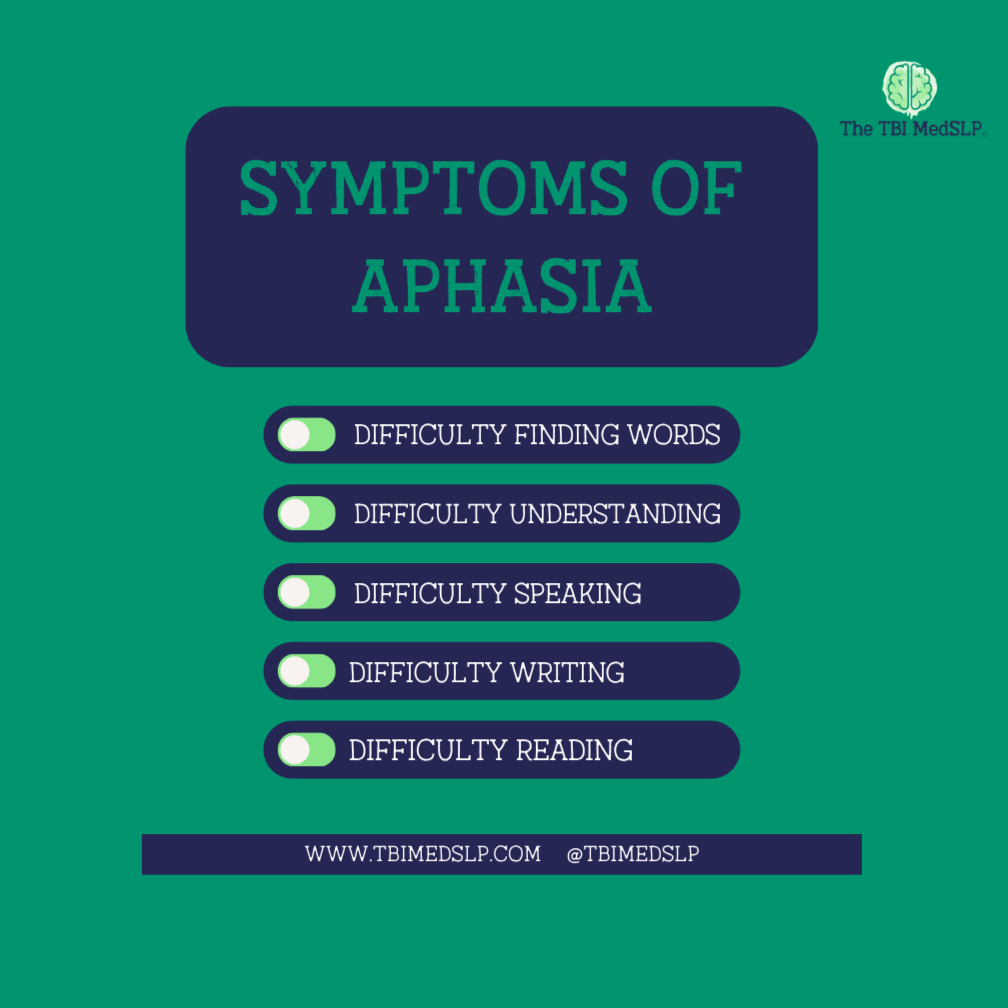
Symptoms and Signs of Aphasia:
Aphasia symptoms can vary based on the type and severity of the condition.
Some common signs and symptoms of aphasia include:
Difficulty finding words: Individuals with aphasia may struggle to find the right words when speaking or writing. They may experience word-finding difficulties, often using many vague words or substituting them.
Understanding Others: Aphasia makes it hard for someone to understand spoken or written language. They might struggle to follow conversations. They may find it hard to understand instructions. Also, grasping spoken language and written text can be difficult for them.
Difficulty speaking: Aphasia can impair fluency and the ability to form coherent sentences. People with aphasia often use short phrases. They might make up words, too. Sometimes, they struggle to share their thoughts.
Reading and Writing: Aphasia can make it hard for someone to read and write. They might find it hard to understand written text. They may also struggle to write sentences with proper grammar and structure.
Emotional Changes: Aphasia can cause significant frustration and emotionalchallenges for individuals. They might feel frustrated with their communication problems. In some cases, this can lead to social isolation or mood changes, such as depression or anxiety.
Aphasia can occur as a result of a stroke, brain injury, or degenerative brain conditions such as Alzheimer's disease. Aphasia is a loss of language, not intellect. It can significantly impact a person's ability to speak, understand, read, and write. Through expert insights and real-life anecdotes, we aim to unravel the mysteries surrounding aphasia and provide a comprehensive understanding of this condition.
Diagnosis and Assessment of Aphasia
If a doctor, loved one, or anyone suspects aphasia, they should see a speech-language pathologist (SLP). Speech Language Pathologists (SLPs) are experts. They assess and treat people with aphasia. The SLP will assess language abilities, including comprehension, expression, reading, and writing. They may use standardized tests. They also might use observation and interviews. These help assess communication skills.
A doctor might first evaluate a person with sudden language issues after a stroke or head injury in the emergency room. The assessment may include commands, naming objects, reading passages, writing sentences, and conversation. The SLP might also ask the person to identify or describe objects or pictures. The SLP will look at the person's medical history. This includes strokes, brain injuries, surgeries, or tumors. These details help find the cause of aphasia. The assessment performed will also show how severe the aphasia is.
Treatment Options for Aphasia
Aphasia doesn't have a "cure," but speech therapy can improve impairments! However, it can help people communicate better. It may also help them regain some language skills. Some spontaneous recovery can occur in the first days and weeks after a stroke as the brain heals. The main treatment for aphasia is speech-language therapy. SLPs customize treatment for aphasia to fit each person’s needs and goals. Aphasia can improve over time, but outcomes vary for most people. Research shows that stroke recovery can keep going even after the first few months. Improvements in language and communication can continue for years after a stroke. Research studies show ongoing recovery even in the chronic stages of aphasia.
Speech Therapy for Aphasia
Speech therapy is the primary treatment for aphasia. It focuses on enhancing language skills. Recovery can continue for years after a brain injury, and as the brain heals. Speech therapists use patient-centered, research-based exercises and strategies. The goals of speech therapy may include:
Restoring language abilities: Speech therapy aims to help individuals regain lost language skills.
Speech therapy includes exercises to improve:
Word retrieval
Forming sentences
Listening and understanding
Improving Language Fluency
Improving Functional Communication
Reading Comprehension
Developing Communication Strategies: Speech therapy helps people learn new ways to communicate. This can fill in gaps caused by their challenges. Involving a loved one in practice and carryover is also an important part of treatment.
Strategies may include:
Using gestures
Using compensatory word-finding strategies
Augmentative and Alternative Communication (AAC) Devices
Communication Partner Training
Low-tech AAC supports
Improving comprehension: Speech therapy helps people understand spoken language. It also improves their ability to understand written language.
Therapy for receptive language includes exercises to regain:
Auditory comprehension skills
Reading comprehension
Language processing
Speech therapy for aphasia happens in individual or group sessions. It includes regular meetings. There are also home exercises. These help practice the skills and strategies learned. Family members can practice strategies at home and support daily conversation. The length and frequency of treatment depend on each person's needs and progress. Progress can vary, but many people continue to improve with ongoing therapy.
Coping Strategies for Individuals with Aphasia
Along with formal speech therapy, people with aphasia have many coping strategies. These strategies help them communicate better. They can also improve their quality of life.
These strategies include:
Taking it slow: People with Aphasia often do better when they communicate at a relaxed pace. They can benefit from little to no social pressure. They should take their time when they talk and be around others who support them. This technique helps them organize their thoughts. They can find the right words more easily and with less frustration.
AAC for Aphasia: Using alternative communication methods can help. Supports like pictures and gestures aid people with aphasia. Written cues and AAC also help them understand and share their messages. These visual supports can enhance comprehension and aid in word retrieval.
Joining Support Groups: Support groups offer a safe space for people with aphasia. Some groups focus on stroke survivors. These groups help people share stories. They learn from one another and find emotional support. Support groups help with communication skills. They offer a friendly space. Stroke support groups help people adjust to life after aphasia.
Staying connected with loved ones is vital for people with aphasia. Joining social activities helps, too, but it can be hard. Talking with others helps strengthen communication skills. It builds confidence, supports participation, and prevents feelings of isolation. Regular social interactions are important too.
Support Groups and Resources for Individuals with Aphasia
Living with aphasia can be challenging. Support services and resources are available for people with aphasia and their families.
These resources may include:
Speech-Language Pathologists: SLPs are experts qualified and trained to address communication impairments. SLPs evaluate communication disorders. They also treat problems like aphasia. Speech therapists often get referrals for ongoing aphasia evaluation and treatment. They provide personalized therapy and help people with aphasia.
Aphasia and Rehabilitation Centers: These centers help people with aphasia. They offer programs and support services. These centers provide therapy and support groups. They offer educational programs and social activities for people with communication disorders. The National Aphasia Association also has support groups and resources.
Online Communities: Online platforms help people with aphasia connect. It’s simple and easy. Lingraphica has a great online platform. JoinIn helps people with aphasia connect online. Users can also share their stories. They can also find helpful information and resources.
Assistive Technologies: Various assistive technologies are available to help individuals with aphasia communicate. These technologies may include speech-generating devices, text-to-speech apps, and communication boards.
Caregiver Training: Caregivers play a vital role in supporting individuals with aphasia.
Caregivers can access training programs and resources to:
Understand aphasia
Learn effective communication strategies
Practice everyday conversations
Get emotional support
The American Stroke Associationis a reputable source of stroke-related support and education for families.
Aphasia is a complex language disorder. It can significantly impact a person's ability to functionally communicate. People with aphasia can improve their communication skills. They need the right support, resources, and strategies. Speech therapy, assistive tech, and support networks are key tools for people with aphasia.
Understanding aphasia helps people with aphasia. It shows how misunderstood this condition is. It also builds empathy and compassion for those who live with it. We can help people with aphasia by seeing their challenges. Promoting inclusive communication makes society better. This way, everyone’s voice gets heard and understood.