

Understanding the Link Between Traumatic Brain Injury and Epilepsy
The link between TBI and Epilepsy
Traumatic brain injury can have lasting neurological effects. One possible complication is post-traumatic epilepsy (PTE). PTE is a condition involving unprovoked seizures that develop after a brain injury. The risk is not the same for everyone and depends on factors such as the severity and type of injury.
Understanding the difference between a seizure, an early post-traumatic seizure, and post-traumatic epilepsy is important for accurate diagnosis, appropriate treatment, and informed long-term care.
Overview of Epilepsy
Epilepsy is a neurological disorder that causes repeated "unprovoked" seizures, meaning seizures that are not triggered by an immediate illness, injury, or other temporary cause. A seizure occurs when a sudden burst of abnormal electrical activity in the brain temporarily changes how the brain functions.
Epilepsy is commonly diagnosed when a person has:
At least two unprovoked seizures occurring more than 24 hours apart;
One unprovoked seizure accompanied by a sufficiently high risk of another seizure, or
A recognized epilepsy syndrome.
This means that epilepsy does not always need a history of multiple seizures. In some situations, one unprovoked seizure combined with a high risk of another seizure may be enough for diagnosis.
Seizures can affect:
Awareness
Movement
Sensation
Communication
Memory
Emotion; or
Behavior
Symptoms differ depending on where the seizure begins and where the abnormal activity spreads through the brain.
Epilepsy has many possible causes, including:
Genetic conditions
Stroke
Infection
Developmental abnormalities
Brain tumors; and
Traumatic brain injury (TBI)
In epilepsy associated with TBI, structural damage from the injury may create long-term changes in the brain. These changes make the brain more susceptible to recurrent seizures.
Diagnosis usually involves:
Detailed medical history
A description of the suspected events
Neurological examination
Electroencephalography (EEG); and
Brain imaging (when appropriate)
Treatment often includes antiseizure medication. Some people with drug-resistant epilepsy benefit from an evaluation to determine whether surgery, neurostimulation, dietary therapy, or other specialized treatments may be appropriate.
How TBI Can Lead to Epilepsy
A traumatic brain injury (TBI) can alter:
brain tissue
blood vessels
neural connections; and
chemical signaling
These changes can start a gradual process called epileptogenesis. Epileptogenesis is the process in which brain changes post-injury can gradually increase the chances of developing seizures.
Possible contributors include:
Direct injury to neurons and supporting cells;
Intracranial bleeding;
Disruption of the blood-brain barrier;
Inflammation;
Tissue loss and scarring;
Changes in excitatory and inhibitory signaling;
Reorganization of neural networks.
These mechanisms remain an active area of research. Researchers believe multiple biological changes work together to increase the risk of epilepsy after a TBI.
The risk of post-traumatic epilepsy significantly rises with more severe injuries.
The factors associated with higher risk include:
Penetrating brain injuries
Intracranial hemorrhage
Skull fractures in which part of the bone is pushed inward toward the brain (called a depressed skull fracture)
Early post-traumatic seizures; and
Injuries requiring neurosurgical intervention
Mild traumatic brain injuries can be followed by seizures. The definite risk of epilepsy is generally much lower than it is after moderate, severe, or penetrating TBI.
Post-Traumatic Seizures and Post-Traumatic Epilepsy
Seizures occurring after TBI are often categorized according to their timing:
Immediate seizures: within the first 24 hours;
Early post-traumatic seizures: within the first seven days;
Late post-traumatic seizures: more than seven days after the injury.
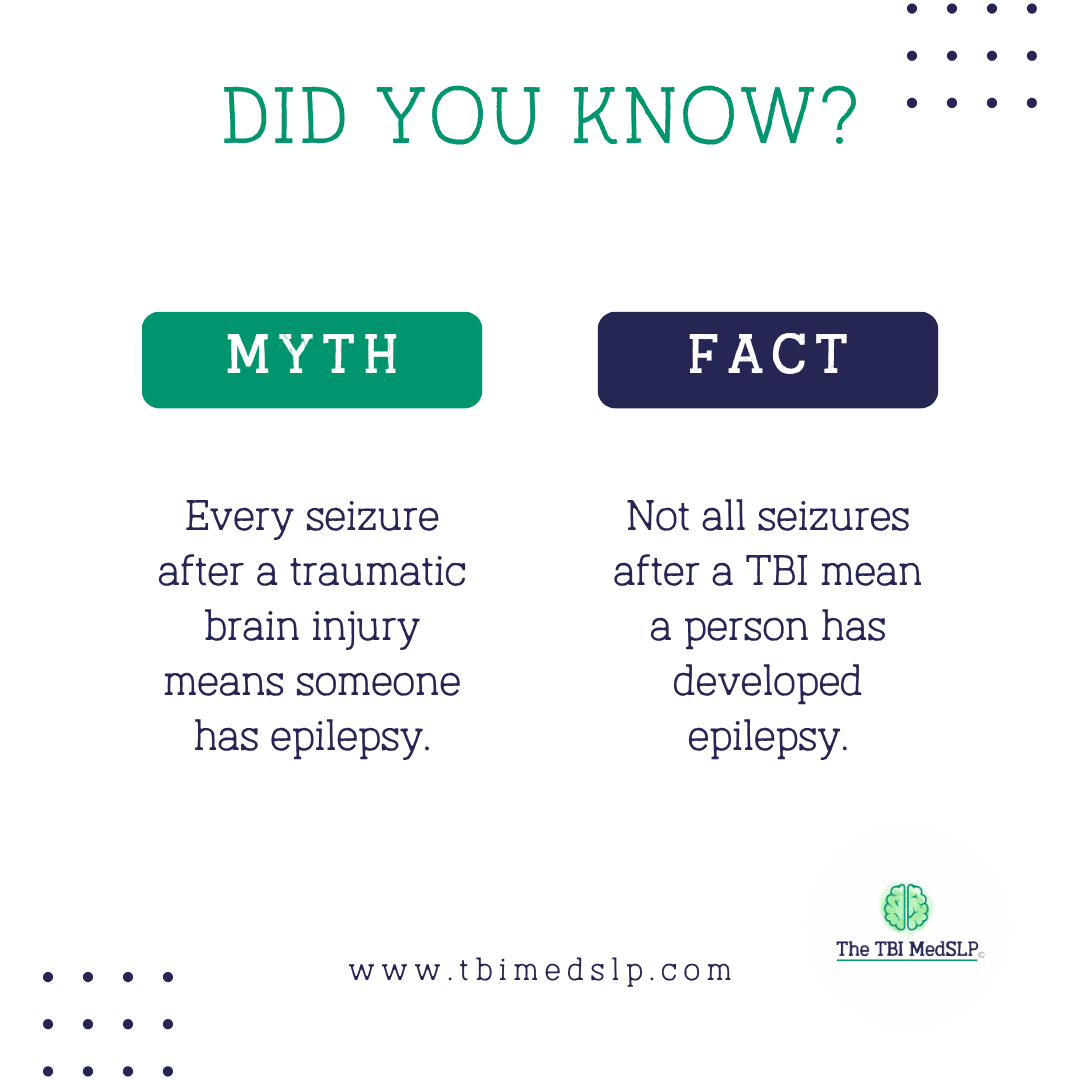
Immediate and early seizures are usually classified as acute symptomatic seizuresbecause they occur soon after the brain injury. They're considered a direct result of the injury itself. These do not always mean that the individual has developed epilepsy. A late seizure is more concerning for an enduring epileptic tendency.
Types of Seizures Associated With TBI
TBI produces an acquired structural brain injury; PTE most commonly involves focal-onset seizures. A focal-onset seizure begins in one area of the brain and can affect awareness, movement, sensation, emotions, or behavior.
Symptoms can include:
Rhythmic movement of one body part;
Sudden stiffening or abnormal posturing;
Altered sensation;
Visual, auditory, or olfactory experiences;
A rising sensation in the abdomen;
Sudden fear or déjà vu;
Speech or language disruption;
Staring or reduced responsiveness;
Repetitive, seemingly purposeless movements.
Sometimes, a focal seizure spreads from one area of the brain to both sides. When this happens, the person may lose consciousness, their muscles may become stiff, and they may experience rhythmic jerking movements.
Unlike focal seizures, generalized-onset seizures begin in both sides of the brain at the same time. Although people with a traumatic brain injury (TBI) can develop generalized seizures, focal-onset seizures are much more common in post-traumatic epilepsy (PTE).
In some cases, a seizure lasts too long or more than one seizure occurs without the person fully recovering between them. This is known as status epilepticus. This is a medical emergency that requires immediate treatment. Risk Factors for Developing Epilepsy After TBI
The severity and structural characteristics of the injury are the strongest predictors of PTE.
Risk factors may include:
Moderate or severe TBI;
Penetrating brain injury;
Intracranial hemorrhage, including subdural or intracerebral bleeding;
Cortical contusion;
Depressed skull fracture;
Retained intracranial fragments;
Early post-traumatic seizures;
Greater loss of brain tissue;
Repeated brain injuries;
Neurosurgical procedures related to the injury;
Older age in some adult populations.
Because the person has a history of epilepsy, this is not a risk factor for developing PTE. A prior seizure disorder can complicate the decision of whether later seizures were caused by the TBI.
Age-related risk is complex. Most published studies have too much variability to determine whether older adults or children are at greater risk.
Researchers are studying genetic variants, blood biomarkers, EEG findings, imaging features, and other possible predictors of PTE. At present, genetic testing is not routinely used to predict which individual patients will develop epilepsy or to select preventive treatment.
Symptoms of Post-Traumatic Epilepsy
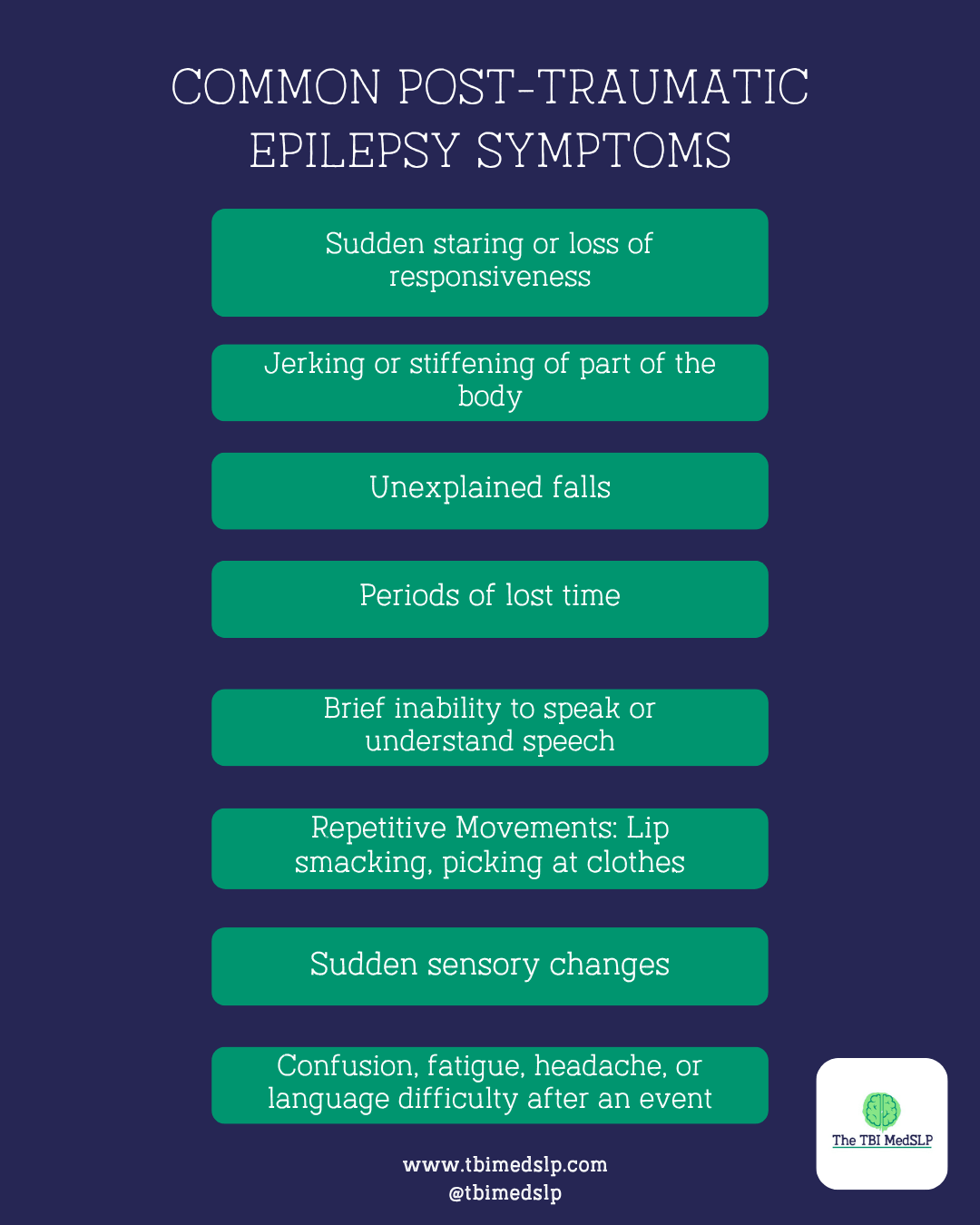
Post-traumatic seizures do not always look like dramatic convulsions. Possible symptoms include:
Sudden staring or loss of responsiveness
Brief inability to speak or understand speech
Repetitive movements such as lip smacking or picking at clothing
Unexplained periods of confusion
Sudden sensory changes
Jerking or stiffening of part of the body
Loss of awareness
Focal-to-bilateral tonic-clonic activity
Unexplained falls
Periods of lost time
Confusion, fatigue, headache, or language difficulty after an event
Experiences such as fear, déjà vu, unusual smells, tingling, or visual changes can occur during focal seizures, but they are not specific to epilepsy. Similar symptoms can arise from migraine, medication effects, sleep disorders, syncope, psychiatric conditions, and other neurological problems.
Accurate evaluation is essential. Not every episode resembling a seizure is epileptic.
Episodic Events that May Resemble Epilepsy:
Psychogenic nonepileptic seizures
Fainting
Movement disorders
Sleep-related behaviors
Metabolic disturbances, and
Cardiac conditions
Diagnosis of Post-Traumatic Epilepsy
Diagnosis begins with a detailed account of the event. Those who experience seizures ahve difficulty recalling the memory of a seizure. The descriptions from witnesses or smartphone videos can be very valuable.
The evaluation may include:
Neurological and medical history;
Review of the original injury and imaging;
Description of event timing and symptoms;
Medication and substance review;
Neurological examination;
Electroencephalography;
Brain imaging;
Laboratory testing when clinically indicated.
An EEG records electrical activity from the brain and may identify epileptiform abnormalities. However, a normal routine EEG does not exclude epilepsy because abnormal activity may not occur during the recording.
Longer ambulatory EEG monitoring or inpatient video-EEG is used when episodes are infrequent, unclear, or difficult to distinguish from nonepileptic events.
MRI is generally more sensitive than CT for evaluating many chronic structural causes of epilepsy.
Imaging can identify structural injuries that support the diagnosis, but an imaging abnormality alone does not prove that a particular event was a seizure.
Preventing Early Seizures After TBI
Antiseizure medication may be used during the acute period after certain moderate or severe TBIs to reduce the risk of seizures within the first seven days. In my experience, I have seen these medications used in patients who were appropriate post-TBI.
Phenytoin has evidence supporting its ability to reduce early post-traumatic seizures. Levetiracetam is commonly used too. Available evidence suggests that both can reduce early seizure risk in adults with TBI.
However, several distinctions are important:
Short-term prophylaxis may reduce early seizures.
It has not been proven to prevent late seizures or post-traumatic epilepsy.
Prophylaxis is not always appropriate after every mild TBI.
Evidence for routine prophylaxis in mild or moderate TBI remains limited and controversial.
Decisions should be individualized and patient-centered, according to injury characteristics and clinical risk.
Current neurocritical-care guidance allows either antiseizure prophylaxis or no prophylaxis in some hospitalized adults with moderate-to-severe TBI. Mainly because there is limited available evidence. When using prophylaxis, a short course is generally favored over prolonged preventive treatment in the absence of seizures.
Treatment of Post-Traumatic Epilepsy
Antiseizure medication is the first-line treatment for most people with post-traumatic epilepsy.
The medication selected depends on factors such as:
Whether seizures are focal or generalized;
Other medical conditions;
Potential medication interactions;
Cognitive and behavioral side effects;
Liver and kidney function;
Bone health;
Pregnancy potential and reproductive considerations;
Cost and access;
Ease of adherence.
Common medications include:
levetiracetam (Keppra®)
lamotrigine (Lamictal®)
lacosamide (Vimpat®)
oxcarbazepine (Trileptal®); and
carbamazepine (Tegretol®)
Since every person is different, healthcare providers choose the medication based on different factors. Including the type of seizures, medical history, other medications, and potential side effects.
Medication needs to be taken according to the prescription label and NEVER stopped without consultation from your MEDICAL DOCTOR. Poor adherence, sleep deprivation, medication interactions, alcohol withdrawal, and acute illness can increase seizure risk in susceptible individuals.
Drug-Resistant Epilepsy and Surgical Evaluation
Drug-resistant epilepsy is generally considered when seizures continue despite adequate trials of two appropriately chosen and tolerated antiseizure medication regimens.
Individuals with drug-resistant focal epilepsy should be referred to a comprehensive epilepsy center rather than continuing repeated medication trials indefinitely.
A specialized evaluation may include:
Prolonged video-EEG;
High-resolution epilepsy-protocol MRI;
Neuropsychological testing;
Functional imaging;
Language and memory mapping;
Intracranial EEG in selected cases.
Transcranial magnetic stimulation is being studied for epilepsy but is NOT an established routine treatment for post-traumatic epilepsy.
Lifestyle, Safety, and Self-Management
Lifestyle measures DO NOT replace medical treatment. They may help reduce avoidable seizure risk and improve general health.
Helpful strategies may include:
Taking medication exactly as prescribed;
Maintaining regular sleep;
Avoiding excessive alcohol;
Avoiding recreational drugs that may lower seizure threshold;
Managing stress;
Staying hydrated;
Reviewing prescription and over-the-counter medications with a clinician;
Keeping a seizure diary;
Creating an individualized seizure action plan.
Not every person has identifiable “triggers". People should never be blamed for seizures that occur despite appropriate self-management.
Safety planning may include precautions around:
bathing
swimming
heights
cooking
open flames
power tools
driving
Driving laws and medical reporting requirements vary by jurisdiction.
Family members and caregivers can also become trained in seizure first aid and, when prescribed, the use of rescue medication.
The Role of Rehabilitation
Neuro-Rehabilitation may be necessary because TBI and epilepsy can affect different aspects of daily functioning. Rehabilitation does not cure epilepsy, but it can help individuals regain function and independence. It can assist and help manage the combined effects of brain injury, seizures, medication side effects, and participation restrictions.
Physical Therapy
Physical therapists may address:
Strength;
Balance;
Coordination;
Walking;
Endurance;
Fall prevention;
Safe use of mobility equipment.
Occupational Therapy
Occupational therapists may address:
Activities of daily living;
Home and community safety;
Fatigue management;
Visual-perceptual difficulties;
Return to work or school;
Environmental modification;
Medication-management routines.
Speech-Language Pathology
Speech-language pathologists may assess and treat:
Attention;
Memory;
Executive functioning;
Cognitive endurance;
Word retrieval;
Verbal organization;
Reading and writing;
Social communication;
Use of external cognitive supports;
Communication changes after seizures.
SLPs may also help the individual and family distinguish baseline TBI-related communication difficulties from temporary postictal changes or medication-related cognitive effects.
Neuropsychology and Mental Health Care
Neuropsychologists, psychologists, psychiatrists, counselors, and other mental-health professionals may support:
Adjustment to disability;
Anxiety;
Depression;
Trauma-related symptoms;
Behavioral regulation;
Identity changes;
Family stress;
Return-to-work or return-to-school planning.
Mental-health symptoms should not automatically be attributed to either TBI or epilepsy. Both neurological and psychological contributors may need to be considered.
Research and Future Directions
Researchers are working to understand why some people develop epilepsy after TBI while others with similar injuries do not.
Important areas of investigation include:
Neuroinflammation;
Blood-brain barrier disruption;
Changes in neural connectivity;
EEG biomarkers;
Blood and cerebrospinal-fluid biomarkers;
Advanced structural and functional imaging;
Machine-learning risk models;
Treatments intended to interrupt epileptogenesis.
Advanced MRI and EEG methods have the potential to improve risk prediction. They are not yet able to determine with certainty whether an individual patient will develop PTE. At present, no medication has been conclusively shown to prevent post-traumatic epilepsy after TBI.
This distinction is important: preventing seizures during the first week is not the same as preventing the later development of epilepsy.
When to Seek Emergency Care
Emergency assistance should be sought when:
A convulsive seizure lasts five minutes or longer;
Seizures occur repeatedly without recovery;
Breathing does not return to normal;
The person is seriously injured;
The seizure occurs in water;
It is the person’s first known seizure;
The person is pregnant;
The person has diabetes or another condition requiring urgent assessment;
The event occurs soon after a new head injury;
The person does not return to their usual neurological status.
During a convulsive seizure, protect the person from nearby hazards, place them on their side when possible, cushion the head, and time the seizure. Do not restrain the person and do not place anything in their mouth.