

Concussion Symptoms in Preschoolers: Signs Parents May Miss
Concussion Symptoms in Preschoolers: Signs Parents May Miss
A preschooler experiencing a concussion may not say, “My head hurts,” “I feel dizzy,” or “I cannot think clearly.” Instead, parents may notice that their child is unusually clingy, more irritable, less interested in playing, unsteady while walking, or unable to complete routines that were previously familiar.
Concussions can be especially difficult to recognize in preschool-aged children. Most concussion symptoms depend on self-reporting, and young children may not yet have the skills to do so. These skills include vocabulary, attention, body awareness, or memory skills needed to recognize and explain what they are feeling.
Identifying concussion symptoms in preschoolers often requires adults to carefully observe changes in the child’s behavior, communication, movement, sleep, eating, and participation.
What Is a Concussion?
A concussion is a type of mild traumatic brain injury that may occur after a bump, blow, or jolt to the head—or after a forceful impact to the body that causes the head and brain to move rapidly.
A child does not have to lose consciousness to sustain a concussion. In fact, most concussions occur without the child being “knocked out.”
Symptoms may appear immediately after the injury, but they can also become more noticeable several hours or days later.
Why Concussions Can Look Different in Preschoolers
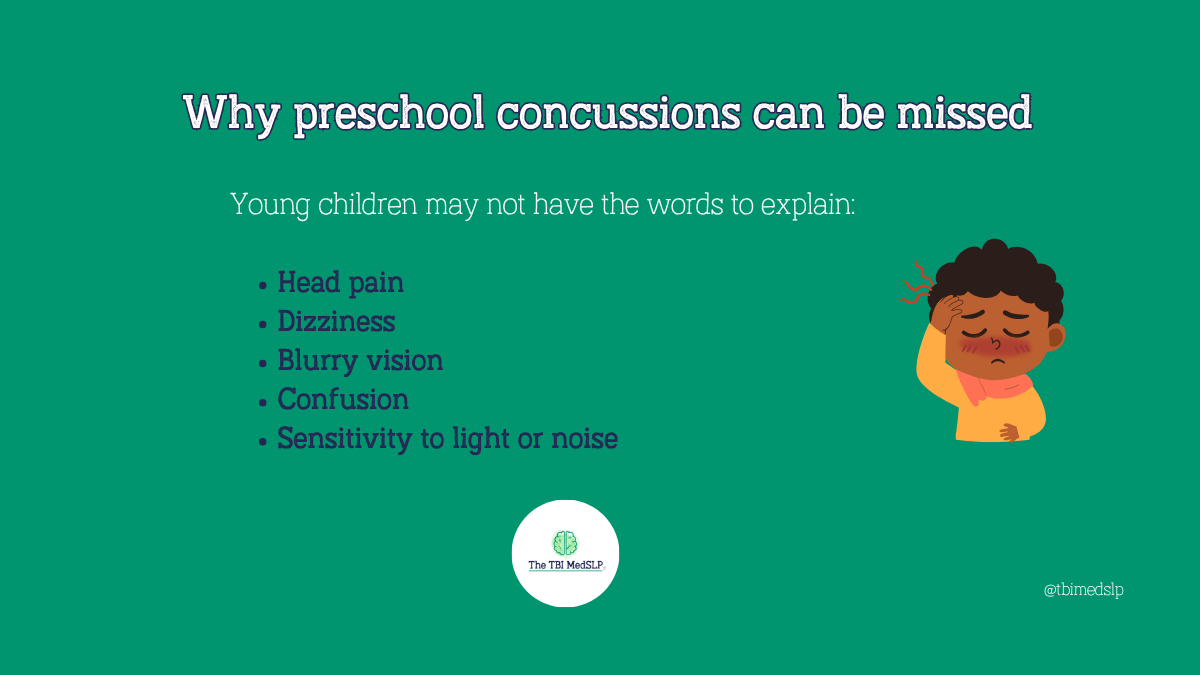
Older children may be able to describe a headache, blurred vision, mental fog, nausea, or sensitivity to noise.
A preschooler may experience the same type of difficulty without knowing how to explain it.
For example:
A child experiencing dizziness may ask to be carried or stop climbing.
A child with light or noise sensitivity may cry in a busy room.
A child experiencing cognitive fatigue may have a tantrum during a routine task.
A child with a headache may hold their head, withdraw from play, or become difficult to comfort.
A child experiencing confusion may respond slowly or struggle with familiar directions.
This is why it is important to compare the child with their own developmental and behavioral baseline.
Behavioral and Emotional Changes
Behavioral changes may be some of the earliest signs caregivers notice.
A preschooler with a possible concussion may:
Become more irritable
Cry more frequently
Have unusually intense tantrums
Seek more physical comfort
Become harder to soothe
Appear unusually quiet or withdrawn
Show increased fearfulness
Lose interest in favorite people or activities
Demonstrate regression in previously established skills
Not every tantrum or emotional reaction after a fall indicates a concussion. The concern is a noticeable change from the child’s typical behavior, particularly when it begins after an injury or occurs with other symptoms.
Changes in Play and Participation
Play can provide important information about how a preschooler is functioning.
After a concussion, a child may:
Stop participating in favorite games
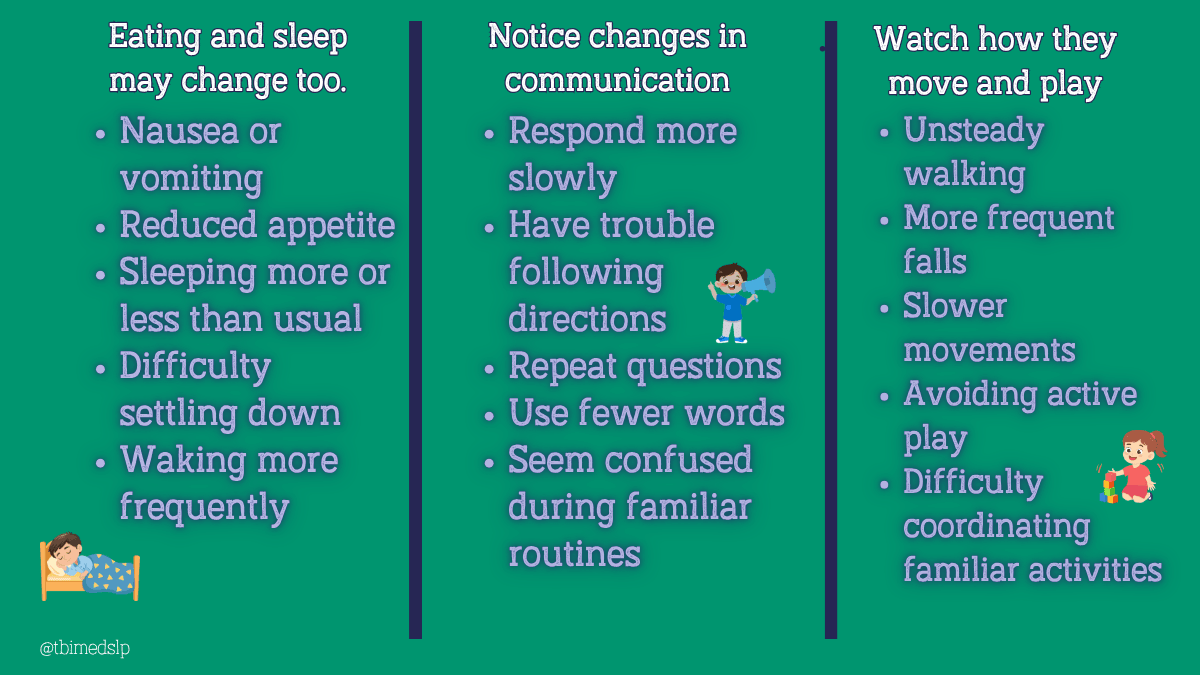
Avoid active or movement-based play
Watch other children rather than joining them
Become tired more quickly
Abandon activities sooner than usual
Struggle to follow the steps of a familiar game
Become overwhelmed in noisy or visually busy environments
Prefer quiet or less stimulating activities
These changes may reflect discomfort, dizziness, fatigue, sensory sensitivity, or difficulty processing information.
Balance and Movement Changes
Concussions can affect balance, coordination, and movement.
Watch for:
Unsteady walking
Increased stumbling
More frequent falls
Holding onto furniture or another person
Moving more slowly or cautiously
Avoiding stairs, climbing, running, or jumping
Difficulty coordinating familiar movements
Asking to be carried more often
Any significant or worsening difficulty walking after a head injury requires prompt medical attention.
Communication and Thinking Changes
Although cognitive symptoms may be difficult to identify in young children, caregivers may notice functional changes.
A preschooler may:
Respond more slowly
Seem confused
Have difficulty following familiar directions
Repeat questions
Lose track of what they are doing
Use fewer words than usual
Have difficulty participating in conversation
Forget familiar information
Struggle with routines they previously understood
A speech-language pathologist may become involved when a concussion affects communication, attention, memory, executive functioning, feeding, or successful participation in school and daily activities.
Physical Symptoms
Young children may not clearly report pain or dizziness, but caregivers may observe:
Holding or rubbing the head
Nausea or vomiting
Reduced appetite
Dizziness or imbalance
Unusual fatigue
Sensitivity to bright lights
Distress around loud sounds
Vision-related difficulty
Reduced tolerance for movement
Appearing dazed or stunned
A single episode of vomiting can occur for multiple reasons, but repeated vomiting following a head injury is an emergency warning sign.
Sleep Changes
Concussion may affect how much or how well a child sleeps.
Changes may include:
Sleeping more than usual
Sleeping less than usual
Difficulty falling asleep
Waking more frequently
Increased daytime sleepiness
Changes in usual nap patterns
Difficulty waking
Preschoolers naturally have different sleep patterns than older children, so compare the child’s sleep with their normal routine.
A child who is increasingly difficult to wake after a head injury requires immediate emergency evaluation.
When to Seek Emergency Care
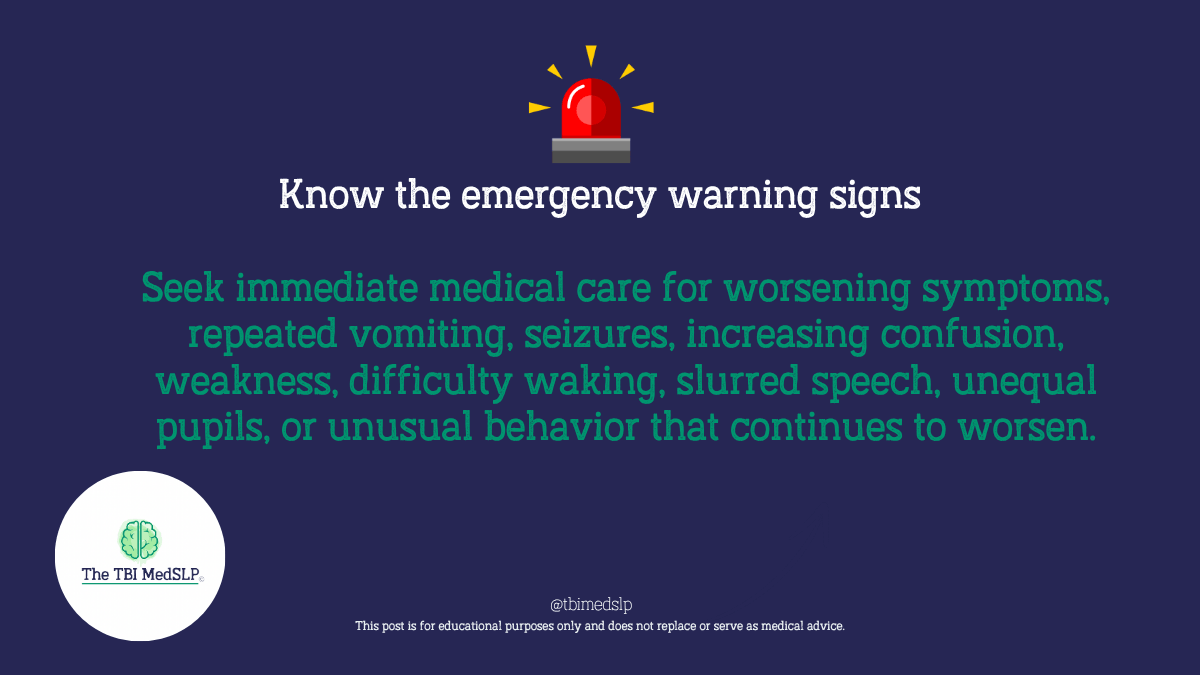
Seek emergency medical care immediately when a child develops serious or worsening symptoms after a head injury, including:
A headache or apparent head pain that becomes more severe
Repeated vomiting
Seizures or convulsions
Increasing confusion or agitation
Unusual behavior that continues to worsen
Slurred speech
Weakness or numbness
Significant difficulty walking
One pupil appearing larger than the other
Loss of consciousness
Inability to recognize familiar people or places
Increasing drowsiness or difficulty waking
Blood or clear fluid coming from the nose or ears
When you are uncertain about the seriousness of a child’s condition, contact a qualified healthcare professional or seek urgent medical evaluation.
What Parents and Caregivers Should Document
Clear observations can help a healthcare provider evaluate a child who cannot reliably explain their symptoms.
Write down:
How and when the injury happened
The part of the head or body that was struck
Whether the child lost consciousness
Any vomiting or seizure activity
Changes in behavior or comfort-seeking
Changes in communication
Changes in walking or balance
Changes in sleep or appetite
Activities the child is avoiding
Whether symptoms are improving or worsening
Whenever possible, describe the change using a specific functional example.
Instead of saying:
“My child seems different.”
You might say:
“My child normally runs to the playground and climbs independently. Since the fall, she asks to be carried, avoids the slide, and becomes upset when other children are loud.”
That comparison gives the healthcare provider more meaningful information.
Supporting Recovery After a Preschool Concussion
Follow the individualized recommendations provided by the child’s healthcare professional.
Current concussion guidance generally supports a brief period of reduced physical and cognitive demands followed by a gradual return to appropriate daily activities that do not significantly worsen symptoms. Children should not be isolated in a dark room for prolonged periods, and they should avoid activities that create a risk of another head injury while recovering.
Temporary adjustments may include:
Shorter preschool or daycare days
Additional rest breaks
Reduced exposure to loud or visually busy environments
Limiting climbing, running, wheeled toys, and rough play
Providing quieter activities
Allowing extra time to complete routines
Monitoring fatigue and emotional regulation
Maintaining communication among families, educators, and healthcare providers
Recovery plans should be individualized because concussion symptoms and developmental needs vary from child to child.
The Most Important Question: What Has Changed?
Parents and caregivers know the child’s routines, personality, communication style, and typical level of activity better than anyone else.
After a possible head injury, do not focus only on whether the child shows a stereotypical concussion symptom.
Ask:
Is my child playing normally?
Are they communicating normally?
Are they walking and moving normally?
Are they sleeping and eating normally?
Are they tolerating their usual environment?
Are they behaving like themselves?
A meaningful change from the child’s baseline may be the clearest indication that something is wrong.
Recognizing concussion symptoms early can help preschoolers receive appropriate evaluation, support, and protection from another injury while their brain recovers.
Educational Disclaimer
This article is provided for educational and informational purposes only and is not medical advice. It should not be used to diagnose or treat a concussion or other medical condition. Contact a qualified healthcare professional when a concussion is suspected. Call 911 or seek immediate emergency care for severe or worsening symptoms.