

7 Tips to Enjoy the Fourth of July After a Brain Injury
7 Practical Tips to Enjoy the Fourth of July After a Traumatic Brain Injury
For some people, the Fourth of July means fireworks, family gatherings, parades, and outdoor celebrations. However, these events can present challenges after a traumatic brain injury (TBI).
Summer holidays, especially the Fourth of July, bring on:
Loud explosions
Bright flashing lights (fireworks)
Crowded environments
Summer heat
Long days
These challenges can lead to:
Headaches
Dizziness
Cognitive fatigue
Sensory overload
Irritability
Balance problems
Difficulty concentrating
This can be the case even months or years after the injury.
Why Fireworks and Crowded Events Can Be Challenging After TBI
Fireworks displays and large gatherings are challenging after a traumatic brain injury. After a TBI, the brain changes how it processes sensory information and regulates cognitive and physical responses.
Research has shown that even mild TBI can disrupt neural networks involved in:
Sensory filtering
Attention
Autonomic regulation
Disruption leads to increased sensitivity and reduced tolerance for stimulating environments.
Noise sensitivity (hyperacusis): Many individuals with TBI experience noise sensitivity due to changes in auditory processing pathways.
Fireworks can reach sound levels exceeding 140 decibels, which may trigger:
Discomfort
Headaches
Anxiety
Sometimes, even pain
Light sensitivity (photophobia): Photophobia is a common post-TBI symptom. It's linked to dysfunction in visual processing pathways and increased cortical excitability. Bright, flashing lights from fireworks can worsen headaches, eye strain, and visual discomfort.
Sensory overload: Combining loud noises, bright lights, crowds, and unpredictable stimuli can overwhelm the brain’s ability to filter and manage sensory input.
This can lead to feelings of:
Overwhelm
Disoriented/disorientation
Emotionally distressed
Cognitive fatigue: After TBI, the brain often requires more effort to process information. Distracting, loud environments demand high cognitive loads. Including sustained attention, rapid processing, and multitasking. This can lead to mental exhaustion more quickly than usual.
Heat intolerance: Some individuals with TBI experience temperature dysregulation. A TBI can cause dysregulation of the autonomic nervous system, impairing the body’s ability to regulate temperature. Hot, humid conditions may contribute to fatigue, dizziness, and symptom exacerbation.
Stress and overstimulation: Crowded environments can increase physiological stress responses. This includes elevated heart rate and cortisol levels. This heightened stress can worsen symptoms such as irritability, anxiety, and difficulty concentrating.
It is important to recognize that every brain injury is different. The type, severity, and location of the injury vary between individuals. Symptoms and tolerance levels vary from person to person
The good news is that a brain injury doesn't mean you have to skip the holiday altogether. With a few simple strategies, brain injury survivors can enjoy the holiday! All while reducing the risk of symptom exacerbation.
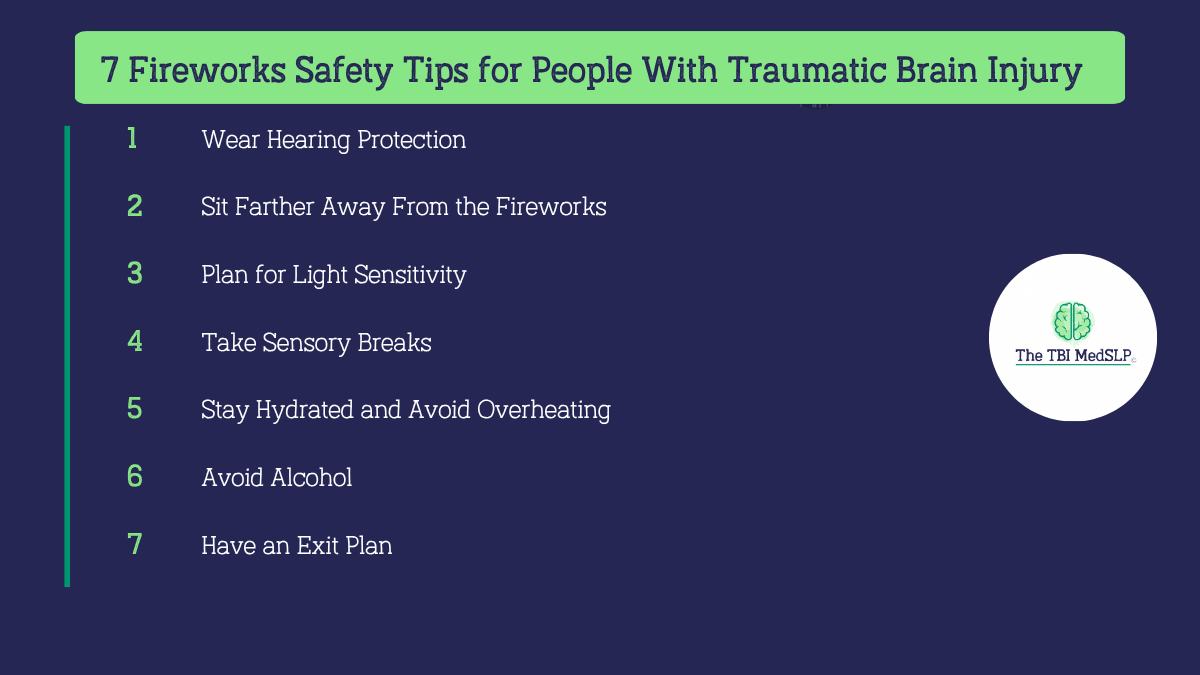
Here are seven practical tips to help you prepare for a safer, more enjoyable Fourth of July.
1. Wear Hearing Protection
Noise sensitivity is one of the most prevalent and clinically significant symptoms following TBI. Approximately 45–59% of individuals report noise sensitivity in the acute phase after mild TBI, declining to about 28% at 12 months.
Fireworks can exceed 140–150 dB, loud enough to trigger sound sensitivity, headaches, sensory overload, and stress in many people with TBI. Foam earplugs or noise-reducing earmuffs can help reduce exposure. These levels can trigger discomfort, pain, or symptom flare-ups following a TBI. Quality hearing protection can significantly reduce noise exposure and help prevent sensory overload.
There are several evidence-based options for hearing protection:
Foam earplugs (NRR 32–33): These are disposable foam earplugs such as 3M E-A-R Soft Yellow Neons or Mack’s Ultra Soft Foam Earplugs. They provide some of the highest levels of noise reduction. BUT ONLY- when inserted the right way (which I can never figure out). These are most often recommended in occupational safety settings for high-noise environments.
High-fidelity or “musician” earplugs (NRR 12–25): Brands like Etymotic Research ER20XS or Loop Experience earplugs reduce overall volume while preserving sound clarity. These are great for individuals who still want to hear conversations while lowering the intensity of fireworks. I personally love loop earplugs when I remember to wear them.
Over-the-ear earmuffs (NRR 22–31): Noise-reducing earmuffs such as 3M Peltor X5A or Howard Leight Leightning L3 provide consistent protection. They are easy to put on and remove. These are often recommended if you have difficulty tolerating earplugs or need ASAP relief.
Noise-canceling headphones: Active noise-canceling headphones like Bose QuietComfort or Sony WH-1000XM5 can reduce background noise and may be helpful in combination with earplugs. They are not a substitute for high-NRR protection in extremely loud environments. They can provide comfort and reduce sensory load. The Sony WH-1000XM5 headphones were my big treat to myself, and I am so happy with the noise canceling!
For individuals with significant noise sensitivity, using double protection (foam earplugs combined with over-the-ear earmuffs or noise-canceling headphones) provides the greatest reduction in sound exposure.
Why it matters: Noise sensitivity (hyperacusis) is a common symptom after TBI and concussion.
2. Sit Farther Away From the Fireworks
The farther you are from the launch site, the lower the intensity of both the noise and the bright flashes. Positioning matters. Sitting farther away from the fireworks display or choosing a spot with partial visual barriers—such as trees, buildings, or a covered porch—can help limit direct exposure to intense light. If possible, watch from indoors through a window where you can control lighting and reduce glare.
It’s also helpful to give your eyes regular breaks. Looking away from the display, closing your eyes briefly, or stepping into a darker space can allow your visual system to reset. Pairing these strategies with other sensory supports, like noise reduction, can make the experience more manageable and enjoyable.
Why it matters: Increasing distance reduces overall sensory stimulation and may help prevent symptom flare-ups.
3. Plan for Light Sensitivity
Wear sunglasses (during daylight or if helpful), a baseball cap or visor, or choose a viewing location where you can partially block bright flashes if needed.
Many individuals with traumatic brain injury (TBI) experience photophobia, or increased sensitivity to light.
Research shows that changes in how the brain processes visual input can make bright or flashing lights feel overwhelming or even painful (Capó-Aponte et al., 2012). Fireworks, with their sudden bursts of brightness and rapid visual changes, can be especially challenging.
Planning ahead can help reduce discomfort and prevent sensory overload. Consider wearing tinted or polarized sunglasses, even at night, to soften the intensity of bright flashes. Some people find relief with FL-41-tinted or colored lenses, which have been shown to reduce light sensitivity and visual discomfort in neurological conditions. A 2026 study found that TBI patients have significantly lower visual photosensitivity thresholds than controls, and that both FL-41-tinted lenses and gray-filtering lenses improved light tolerance. However, for persistent photophobia, referral to optometry, neuro-ophthalmology, or vision rehabilitation is recommended.
Why it matters: Photophobia (light sensitivity) commonly persists after TBI and concussion and can worsen headaches and visual discomfort.
4. Take Sensory Breaks
If symptoms begin to increase, move to a quieter, darker area for several minutes before returning—or end the outing if needed.
Even with preparation, your brain may still become overwhelmed during loud or busy events. Taking planned sensory breaks can help prevent symptoms from getting worse. Breaks can also support better regulation.
After a traumatic brain injury, the brain often has a reduced ability to filter and process sensory input like it did before. Research shows that individuals with TBI may experience increased neural fatigue and slower recovery after exposure to noise, crowds, or bright lights (McAllister, 2011; Silverberg & Iverson, 2013). Being proactive and stepping away before symptoms worsen helps protect you.
A sensory break involves taking a pause and removing yourself from stimulating environments. This allows your nervous system to reset. This can be as simple as stepping into a quiet room, sitting in your car, or finding a calm outdoor space away from crowds and fireworks.
Signs that you may need a sensory break include:
Increased irritability or anxiety
Headache or pressure in the head
Difficulty concentrating or following conversations
Feeling overwhelmed or “shut down”
Sensitivity to sound or light becoming more intense
To make sensory breaks more effective:
Plan ahead by identifying quiet spaces at your destination
Set a timer or check in with yourself every 20–30 minutes
Use calming strategies such as deep breathing or grounding exercises
Bring comfort items like sunglasses, a hat, or noise-reducing headphones
Taking breaks early and often can help you stay engaged longer. They also reduce the risk of symptom flare-ups. Rather than pushing through discomfort, listening to your body supports recovery and allows you to participate more safely in meaningful activities.
Why it matters: Sensory overload can increase cognitive fatigue, dizziness, irritability, and difficulty concentrating. Brief recovery periods can help reduce symptom intensity.
5. Stay Hydrated and Avoid Overheating
July celebrations often involve prolonged exposure to heat. Drink water throughout the event and seek shade when possible.
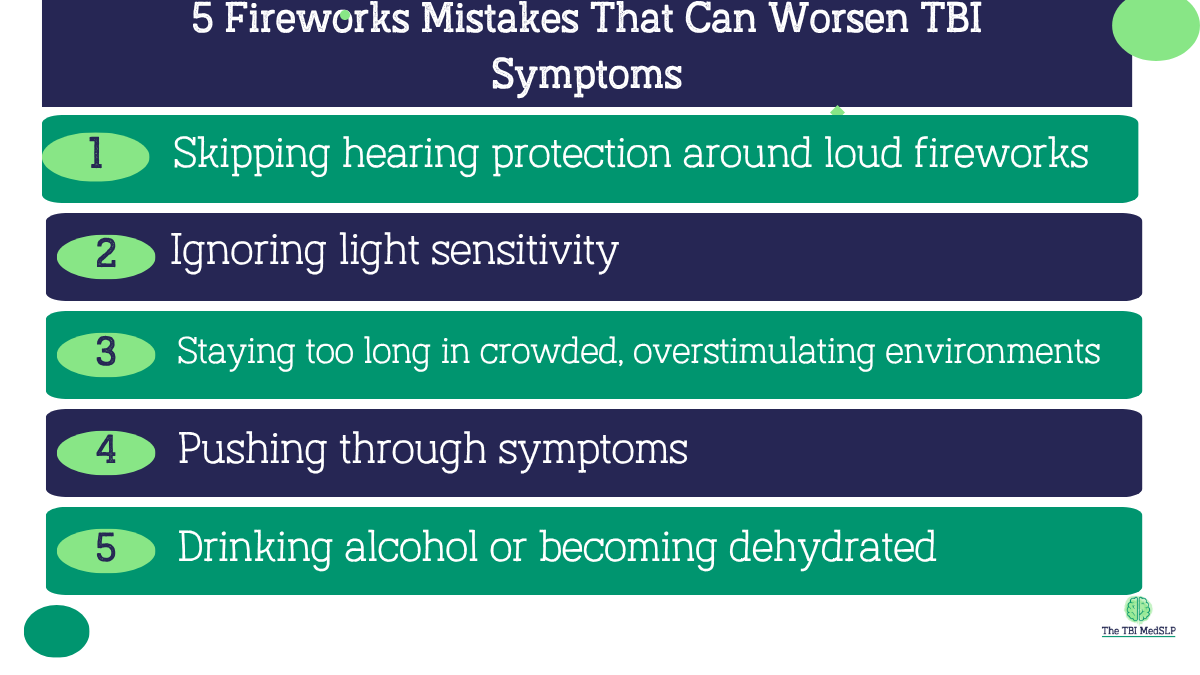
Staying well-hydrated and keeping your body cool are essential for managing symptoms after a traumatic brain injury (TBI). Research shows that even mild dehydration can worsen fatigue, headaches, dizziness, and cognitive difficulties—symptoms that are already common after brain injury. Heat exposure can also increase irritability, slow processing speed, and make it harder for the brain to regulate itself effectively.
To reduce these risks, drink water consistently throughout the day rather than waiting until you feel thirsty. Limit alcohol and caffeine, as both can contribute to dehydration. When attending outdoor events, seek shade, wear lightweight clothing, and take regular breaks in cooler environments, such as air-conditioned spaces or your car. Using cooling tools like handheld fans, cooling towels, or ice packs can also help regulate body temperature.
Prioritizing hydration and temperature control supports brain function, helps prevent symptom flare-ups, and allows you to participate more comfortably in activities.
Why it matters: Dehydration and heat can contribute to headaches, fatigue, dizziness, and reduced cognitive performance—symptoms already common after TBI.
6. Avoid Alcohol if It Worsens Your Symptoms or Interacts With Your Medications
Alcohol may impair balance, judgment, reaction time, and cognition and can interact with medications commonly prescribed after brain injury.
Alcohol can increase sensitivity to sound, slow reaction time, and make it harder for your brain to process sensory information—especially after a traumatic brain injury (TBI). Research shows that individuals with TBI may experience stronger and longer-lasting effects from alcohol due to changes in brain function and reduced tolerance.
This can lead to:
Increased fatigue
Dizziness
Headaches
Difficulty managing overstimulation in environments like fireworks displays
If you notice that alcohol worsens your symptoms, it may be best to limit or avoid it altogether during events where sensory input is already high. Choosing non-alcoholic alternatives can help you stay more alert, comfortable, and in control of your environment.
Why it matters: These effects can compound existing TBI symptoms and increase the risk of falls.
7. Have an Exit Plan
Drive separately if possible, identify a quiet place to retreat, and let family or friends know you may need to leave early if symptoms worsen.
Before attending any Fourth of July event, it’s important to plan how you will leave if things become overwhelming. Individuals with traumatic brain injury (TBI) may experience sensory overload more quickly due to changes in how the brain processes sound, light, and stimulation. Research shows that overstimulation can increase fatigue, irritability, headaches, and cognitive strain in people with TBI (Silver et al., 2009).
An exit plan helps reduce anxiety because you know you have a safe way to step away if needed. This might include driving your own car, identifying a quiet space nearby, or agreeing on a signal with a friend or family member when you’re ready to leave. Having this plan in place allows you to participate more comfortably, knowing you can prioritize your well-being at any time.
Plan ahead by driving separately if possible.
Communicate your needs and exit plan with family beforehand.
Identify quiet locations where you can take breaks.
Bring headphones or ear protection to manage noise.
Keep water and any necessary medications easily accessible.
Why it matters: Planning ahead reduces stress and allows you to respond quickly if sensory overload, headaches, dizziness, or fatigue become overwhelming.
And TBI survivors, ENJOY your holiday using this Quick Fourth of July Packing Checklist:
✓ Ear protection
✓ Sunglasses
✓ Hat or visor
✓ Water bottle
✓ Medications
✓ Cooling towel or fan
✓ Snacks
✓ Phone charger
✓ Emergency contact
This blog post serves for educational purposes only. The information in this article is not medical advice and should not replace guidance from your physician or rehabilitation team. If you experience a sudden or severe worsening of symptoms, develop new neurological symptoms, or sustain another head injury, seek immediate medical attention. Call 911 if you believe you are experiencing a medical emergency.