

Navigate Your Brain's Chemistry: A Look at 6 Key Neurotransmitters.
How Traumatic Brain Injury Affects Neurotransmitters: Symptoms, Functions, and Recovery
The human brain contains billions of neurons that constantly exchange information. They do this with the help of neurotransmitters—chemical messengers that allow one neuron to communicate with the next. Every thought you have, every memory you form, every emotion you feel, and every movement you make depends on this continuous exchange of messages.
A traumatic brain injury (TBI) can disrupt that communication in ways that are not always visible. When neurotransmitter signaling changes, the effects can reach far beyond memory or thinking. Some people struggle to focus during a conversation, while others notice changes in mood, sleep, motivation, balance, or reaction time. These symptoms can occur because the brain's chemical messengers are no longer communicating as efficiently as they did before the injury.
Understanding how neurotransmitters work provides a clearer picture of why traumatic brain injury affects people so differently. In this article, you'll learn what neurotransmitters are, how TBI changes their function, how those changes contribute to common symptoms, and what current research says about supporting brain health during recovery.
What Are Neurotransmitters and How Do They Work?
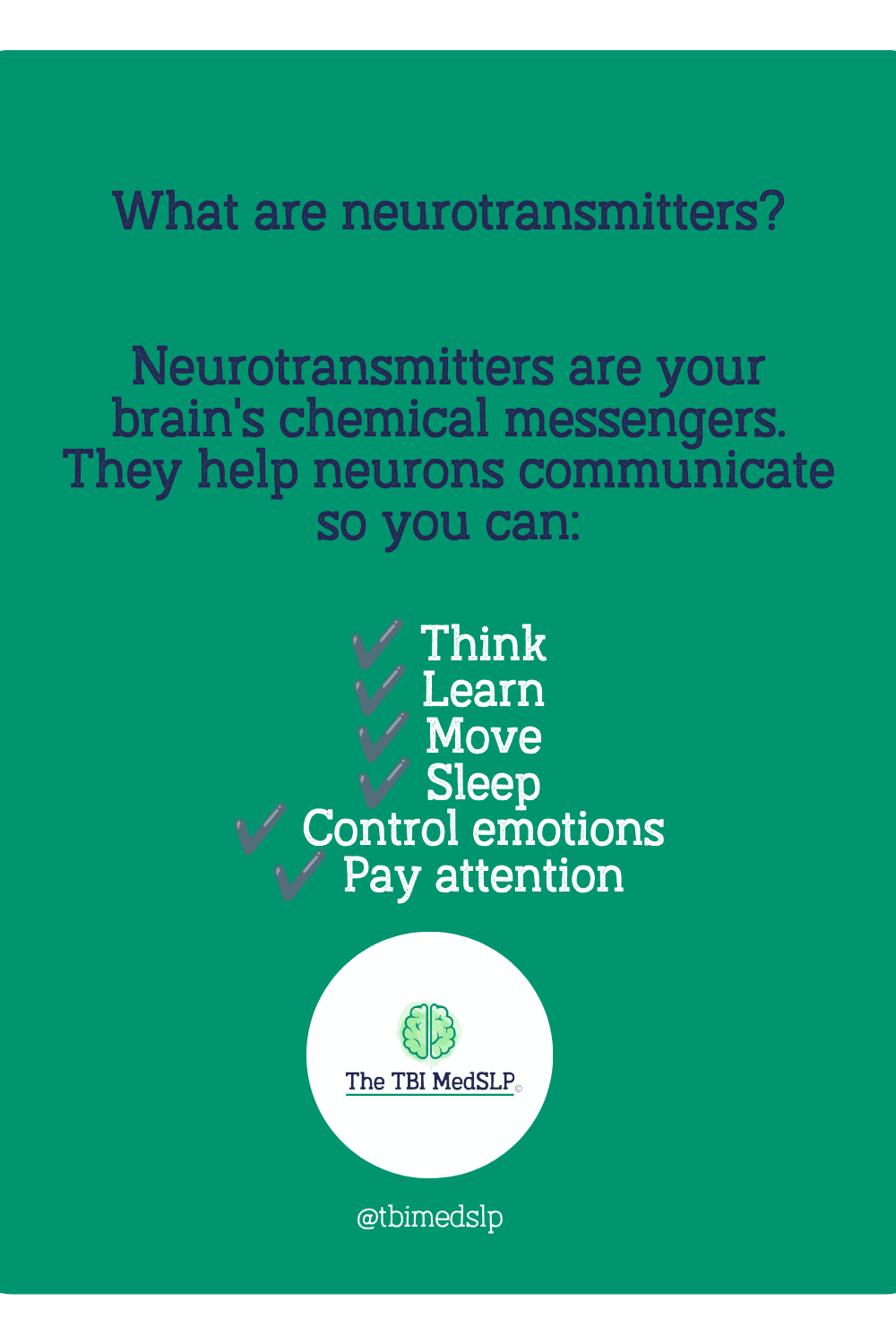
Neurotransmitters are chemical messengers that allow neurons to communicate with one another. A neuron is a specialized nerve cell that sends and receives information throughout the brain, spinal cord, and the rest of the body.
Neurotransmitters are made, stored, and released into the synapse, where they attach to receptors on the next neuron. Depending on the neurotransmitter, they can either increase or decrease the likelihood that the next neuron will fire an electrical signal. They are then either recycled or broken down by enzymes.
When a neuron is activated by an electrical impulse called an action potential, it causes tiny sacs called synaptic vesicles to release neurotransmitters. These tiny sacs are located in the axon terminal, the end of the neuron where it communicates with the next nerve cell. These chemical messengers travel across the synapse, the small gap between two neurons. Then they attach to receptors on the next neuron. After attaching to a receptor, some neurotransmitters make the next neuron more likely to send an electrical signal, while others make it less likely.
When a neuron is activated by an electrical signal (an action potential), it releases neurotransmitters from vesicles. These neurotransmitters travel across the synapse and attach to receptors on the next neuron, helping pass the message from one nerve cell to the next. This is how nerve cells communicate to help your brain and body work together.
Continuous communication allows the brain to control everything from movement and memory to emotions, thinking, and bodily functions.
Major Neurotransmitters and Their Functions
After a traumatic brain injury, changes in brain chemistry can sometimes cause additional damage beyond the initial injury.
One important example is a process called excitotoxicity.Think of glutamate as the brain's "go" signal. Normally, it helps neurons communicate, learn, and form memories.
After a brain injury, however, the brain can release too much glutamate. This overstimulates neurons and causes additional damage to brain cells.This harmful process is called excitotoxicity.
Dopamine: Helps control motivation, reward, learning, and movement. Changes in dopamine signaling have been linked to conditions such as Parkinson's disease, addiction, and some mood disorders. After a traumatic brain injury, dopamine signaling may become disrupted.
This can contribute to problems with:
Motivation
Attention
Slowed thinking/ Decreased processing speed
Movement
Learning
Serotonin: Serotonin is called the brain's "feel-good" neurotransmitter.
Serotonin helps regulate
Mood
Emotional well-being
Sleep
Appetite
Pain
Many antidepressant medications, including Selective serotonin reuptake inhibitors (SSRIs), work by increasing serotonin levels in the brain. A traumatic brain injury can change serotonin levels, which may contribute to depression, anxiety, sleep problems, and emotional changes during recovery.
GABA (gamma-aminobutyric acid): The brain's main calming neurotransmitter. It helps slow down brain activity, reducing anxiety and preventing neurons from becoming overactive. Medications called benzodiazepines increase GABA's effects. Medications called benzodiazepines increase GABA's effects. Brain injuries can disrupt GABA signaling, making it harder for the brain to regulate its activity. This may contribute to anxiety, increased brain excitability, and, in some people, seizures.
Glutamate: Glutamate is the brain's main excitatory neurotransmitter. It plays an essential role in learning and memory. However, too much glutamate after a brain injury can damage neurons through a process called excitotoxicity. Soon after a traumatic brain injury, large amounts of glutamate may be released. This overstimulation can damage neurons and contribute to ongoing brain injury.
Acetylcholine: Acetylcholine helps control attention, learning, memory, and muscle movement. After a traumatic brain injury, disruptions in acetylcholine production occur, making it harder to focus, learn new information, and form memories. Reduced acetylcholine activity is also linked to Alzheimer's disease and other diseases that affect the brain over time.
Norepinephrine (Noradrenaline): Norepinephrine regulates alertness, attention, and the body's stress response. Norepinephrine helps the brain stay alert and respond to what's happening around you. After a traumatic brain injury, changes in Norepinephrine can make it harder to focus, manage stress, and adapt when situations change.
A traumatic brain injury rarely affects just one neurotransmitter. Instead, it can disrupt several neurotransmitter systems at the same time. These widespread changes help explain why TBI can affect thinking, memory, movement, mood, sleep, and many other brain and body functions.
How Neurotransmitter Functions Affect Behavior and Health
Neurotransmitters help control nearly every function of the brain and body. They allow neurons to communicate, allowing you to think, learn, remember, move, regulate emotions, sleep, and respond to the world around you. After a traumatic brain injury, this communication system can become disrupted.
Different disruptions affect how neurotransmitters are made, sent, received, and recycled, including:
Damage to brain cells
Inflammation
Reduced blood flow
Changes in brain chemistry
Because each neurotransmitter has a different job, changes in their signaling can lead to different symptoms.
For example:
Reduced dopamine signaling may make it harder to stay motivated to complete everyday tasks, maintain attention during conversations, or move as smoothly as before.
Changes in serotonin may contribute to depression, anxiety, irritability, sleep problems, or changes in appetite.
Reduced acetylcholine signaling can make it harder to remember appointments, learn new information, or follow multi-step directions.
Changes in GABA can make it harder for the brain to "slow down," leaving a person feeling anxious, overwhelmed by busy environments, or, in some cases, increasing the risk of seizures.
Disrupted norepinephrine signaling may make it difficult to stay alert during therapy, concentrate on a task, or adjust to sudden changes in plans.
Most traumatic brain injuries affect several neurotransmitter systems at the same time, not just one. This helps explain why two people with similar injuries can have very different symptoms. It also helps explain why a traumatic brain injury can affect much more than memory or thinking. Changes in neurotransmitters can influence emotions, sleep, movement, learning, behavior, and many other everyday activities.
Understanding how neurotransmitters work helps explain why traumatic brain injury affects much more than memory or thinking—it can influence nearly every aspect of how the brain and body function together.
How to Support Healthy Neurotransmitter Function After a Traumatic Brain Injury
There is no quick way to restore neurotransmitter function after a traumatic brain injury. Healthy daily habits can support brain health and recovery. Getting enough sleep, eating a balanced diet, staying physically active, managing stress, and participating in rehabilitation all help create an environment that supports healthy brain function. Depending on your symptoms, your healthcare provider may also recommend medications, counseling, or therapies to help improve mood, thinking, sleep, or behavior. Recovery takes time because the brain is healing and rebuilding its communication pathways. While improvements may happen gradually, consistent healthy habits and following your treatment plan can help support your recovery over time.
Ways to Support Healthy Neurotransmitter Function After a Traumatic Brain Injury
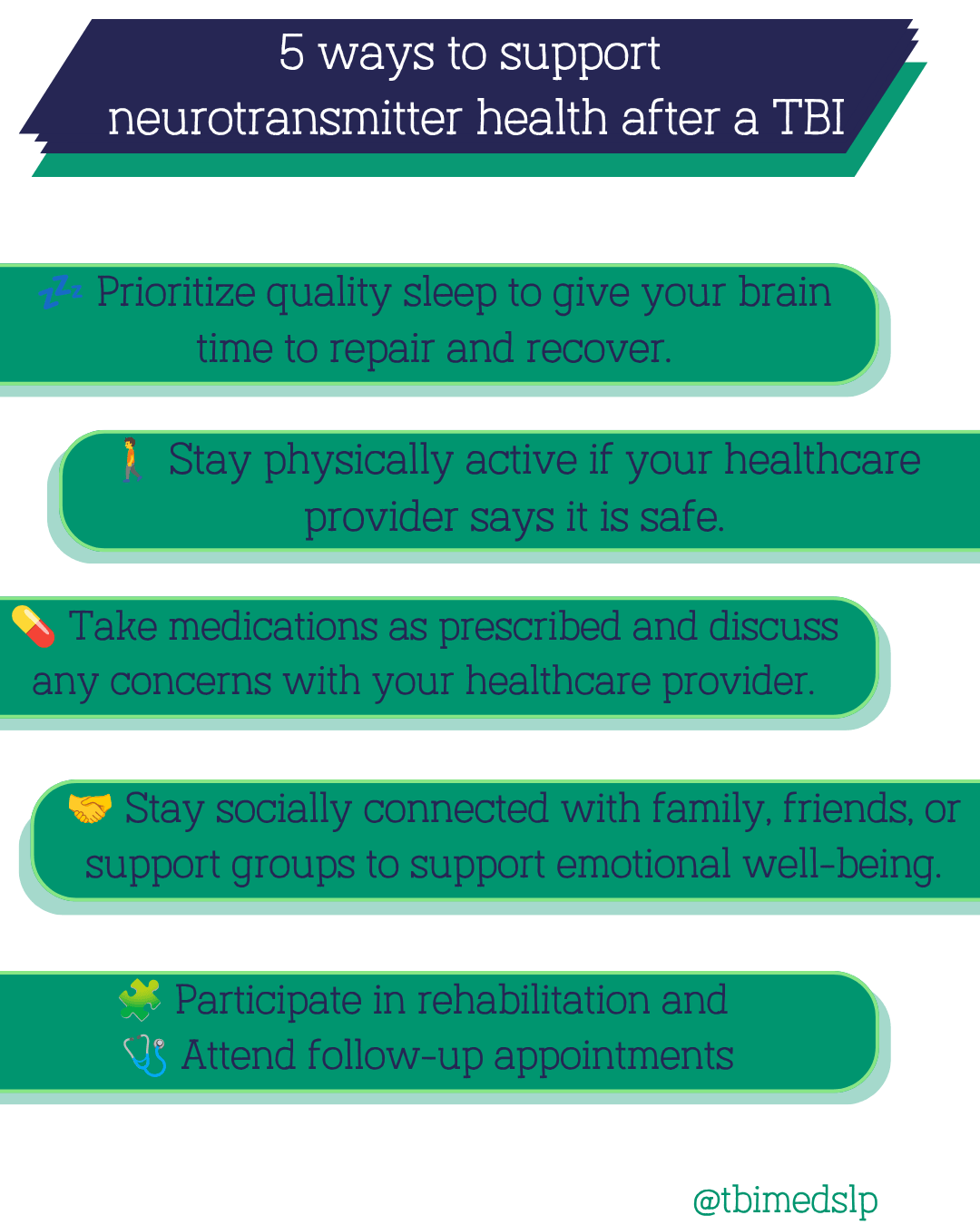
💤 Prioritize quality sleep to give your brain time to repair and recover.
🥗 Eat a balanced, nutrient-rich diet to provide the building blocks your brain needs.
🚶 Stay physically active if your healthcare provider says it is safe.
🧩 Participate in rehabilitation to strengthen thinking, communication, and daily living skills.
😌 Manage stress through relaxation techniques, mindfulness, or counseling.
💊 Take medications as prescribed and discuss any concerns with your healthcare provider.
🤝 Stay socially connected with family, friends, or support groups, as positive social interactions can support emotional well-being during recovery.
🩺 Attend follow-up appointments so your healthcare team can monitor your recovery and adjust your treatment plan as needed.
Testing and Clinical Considerations
Directly measuring neurotransmitter levels in the brain is complex. Qualified physicians assess symptoms, use imaging (PET, SPECT) in research contexts, or analyze peripheral markers. Treatment targets symptoms and suspected neurotransmitter dysfunction through medication, psychotherapy, and lifestyle interventions.
How quickly do changes in neurotransmitter functions affect mood?
Changes in neurotransmitters can affect mood within minutes, hours, days, or even weeks after a traumatic brain injury. Some changes happen almost immediately because the injury disrupts the brain's normal chemical communication. Other changes develop over time as the brain heals and adapts. Neurotransmitters such as serotonin, dopamine, norepinephrine, and GABA help regulate mood and emotions. When these chemical messengers are disrupted, people may feel sad, anxious, irritable, emotionally "flat," or experience mood swings. However, neurotransmitters are only one part of the picture. Pain, poor sleep, stress, medications, and the location and severity of the brain injury can also affect mood. This is why mood changes after a traumatic brain injury can look different from one person to another and may change throughout recovery.
Frequently Asked Questions About Neurotransmitters and Traumatic Brain Injury
Can neurotransmitters recover after a traumatic brain injury?
Yes, neurotransmitter function can improve after a traumatic brain injury, but recovery takes time and varies from person to person. As the brain heals, it can reorganize and form new connections through a process called neuroplasticity. Rehabilitation, healthy lifestyle habits, and medical treatment may all support recovery. However, some people continue to experience changes in neurotransmitter function months or even years after their injury.
How long does it take neurotransmitters to recover after a traumatic brain injury?
There is no single timeline. Some changes in neurotransmitter signaling happen within minutes or hours after the injury, while others may continue for weeks, months, or longer. Recovery depends on many factors, including the severity of the brain injury, the parts of the brain that were affected, a person's overall health, and the treatments they receive.
Which neurotransmitters are most affected by a traumatic brain injury?
A traumatic brain injury can affect several neurotransmitters at the same time. Some of the most commonly affected include dopamine, serotonin, glutamate, GABA, acetylcholine, and norepinephrine. Because each neurotransmitter has a different role, disruptions can lead to a wide range of physical, cognitive, emotional, and behavioral symptoms.
Can rehabilitation help improve neurotransmitter function?
Yes. Rehabilitation helps the brain strengthen existing neural pathways and build new ones through neuroplasticity. Speech-language therapy, physical therapy, occupational therapy, psychological support, and other rehabilitation services can improve function by helping the brain adapt and recover, even if some neurotransmitter changes remain.
Neurotransmitter functions are the source for nearly every aspect of brain activity. Ranging from movement to emotion, neurotransmitters play a role. Supporting healthy neurotransmission through nutrition, sleep, exercise, and stress management complements medical treatments when indicated.
If you have a neurotransmitter impairment or suspect one, contact your medical doctor for more information and guidance.
Educational Purposes Only: This article is for educational and informational purposes only and should not be considered medical advice. It is not intended to diagnose, treat, cure, or prevent any medical condition. Always consult a qualified healthcare provider with questions about a medical condition, symptoms, or treatment options. Never disregard professional medical advice or delay seeking care because of something you have read in this article. If you are experiencing a medical emergency, call 911 or seek immediate medical attention.